Crime & Law
In New Book, Doctor Argues Violence Should Be Treated as an Epidemic That Can Be Cured
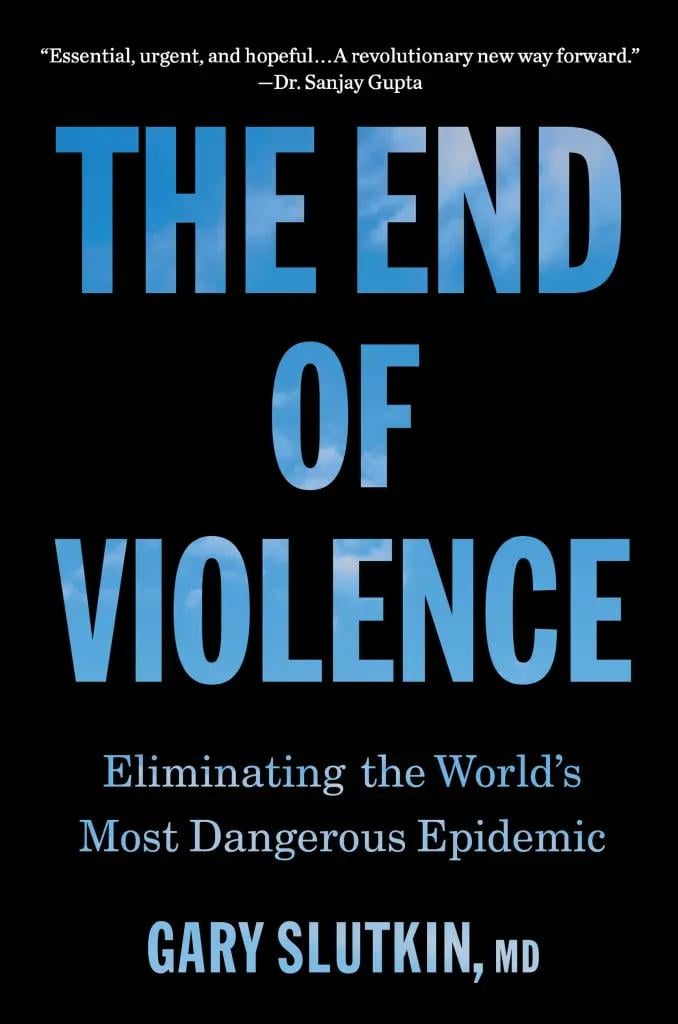
Physician, epidemiologist and author Dr. Gary Slutkin in his new book argues that violence should be treated as an epidemic — and that it can be cured.
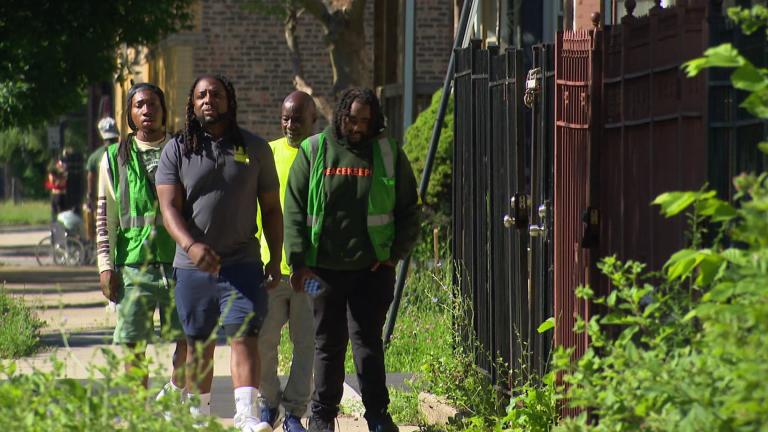
Slutkin founded Cure Violence Global, formerly known as CeaseFire, an organization dedicated to training trusted community members to be violence interrupters. Interrupters work with those at risk of committing violence while providing alternative options and resources.
In “The End of Violence: Eliminating the World’s Most Dangerous Epidemic,” Slutkin writes that global violence can go the way of polio and smallpox.
Violence prevention programs have helped bring down crime rates in Chicago, something Slutkin argues could serve as a blueprint for other communities around the world.
Slutkin said some of the communities he has partnered with since founding his organization have seen shootings drop to zero for one to three years. Some countries, he said, have rates of less than one in 100,000. These are numbers he feels are scalable to all forms of violence ranging from domestic and community violence all the way to war.
“No one ever thought we’d be free of the plague,” Slutkin said. “No one ever thought we’d be free of smallpox or typhus, or that the plague would be so rare. I mean, polio is only in two remote mountain areas of the whole world now and behavior change alone is enough to do it. It’s been shown over and over again for so many of these problems.”
Note: This article has been updated to clarify some of the statistics around violence reduction.
Read an excerpt from the book below:
Robert Sandifer was an eleven-year-old boy nicknamed “Yummy” because of his love of candy. His body was found under a viaduct beneath railroad tracks at East 108th Street—he had been shot twice in the back of the head, execution-style.
The day before his murder, as part of a required gang initiation, Yummy had opened fire on a group of teenagers, killing a fourteen-year-old girl. The kids who killed Yummy were avenging the girl’s death. They were fourteen and sixteen.
I had witnessed violence in Chicago before— or, more accurately, witnessed its effects. When I was in medical school living on the South Side and working shifts at the University of Chicago’s emergency department as part of my rotations, I’d regularly see people with gun-shot wounds and stabbings rushed in on stretchers.
In those years in the ER, I’d sometimes wondered if maybe violence could be treated in some way that went beyond surgeries, sutures, and bandages. But then the next patient would fly into triage, and I was snapping on gloves with no time to think about anything beyond the procedure to be performed right then, the individual life to be saved.
But twenty years later, when I read about Yummy, something changed for me.
What I began to see that summer of Yummy’s killing in Chicago and what I can tell you now with certainty is this: Violence is a contagious disease. I don’t mean that metaphorically. I mean that violence infects a population via the same rules and processes as other infectious diseases: Exposure leads to infection, which progresses to disease, which leads to transmission and further exposure.
I am a scientist by training, an internal medicine and infectious disease physician and then an epidemiologist. I have spent a large portion of my career working to contain epidemic outbreaks in many areas of the world, from tuberculosis in San Francisco to cholera in Somalia to AIDS in Africa and Asia, and I have seen many diseases up close in city ERs, rural clinics, and makeshift field hospitals. I’ve had the opportunity to lead teams to stop the spread of disease in refugee camps, villages, and cities and even helped design some strategies for global containment at the World Health Organization.
In my time overseas, I’d seen heavily armed men walk through the streets of Nairobi, had been waved through checkpoints by men with semiautomatic weapons in Rwanda, had stared down the barrels of big guns drawn on me at night in the desert in Somalia. I’d watched children in the refugee camps run in terror from truckloads of armed men coming to “recruit” them to be soldiers. But learning of Yummy being killed in that way, in my hometown, felt different.
Yummy had shot people because it was what he had to do to belong. And the rules that dictated he shoot people were the same rules that dictated he would be shot. In a way, no one involved had a choice.
Excerpted from THE END OF VIOLENCE by Gary Slutkin, MD. Copyright © 2026 by Gary Slutkin. Used with permission of Little, Brown Spark, an imprint of Little, Brown and Company. New York, NY. All rights reserved.